




Post Study Work Visa in New Zealand 2026: Complete Guide for Nepali Students
By gwtadmin

8th June 2026
28th May 2026
14th May 2026

22nd Feb 2026

27th January 2026

11 November 2025

27th August 2025, Wednesday
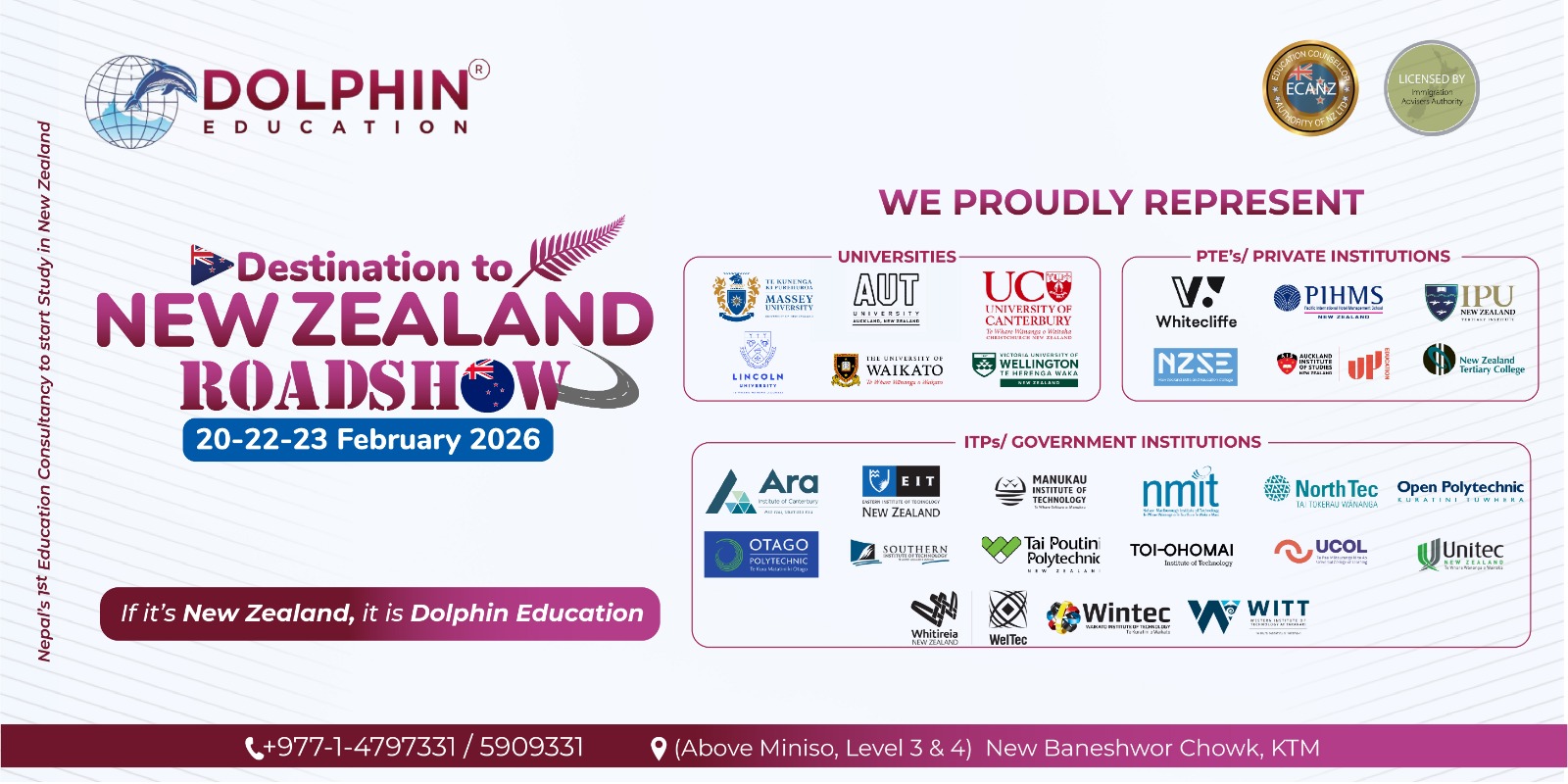
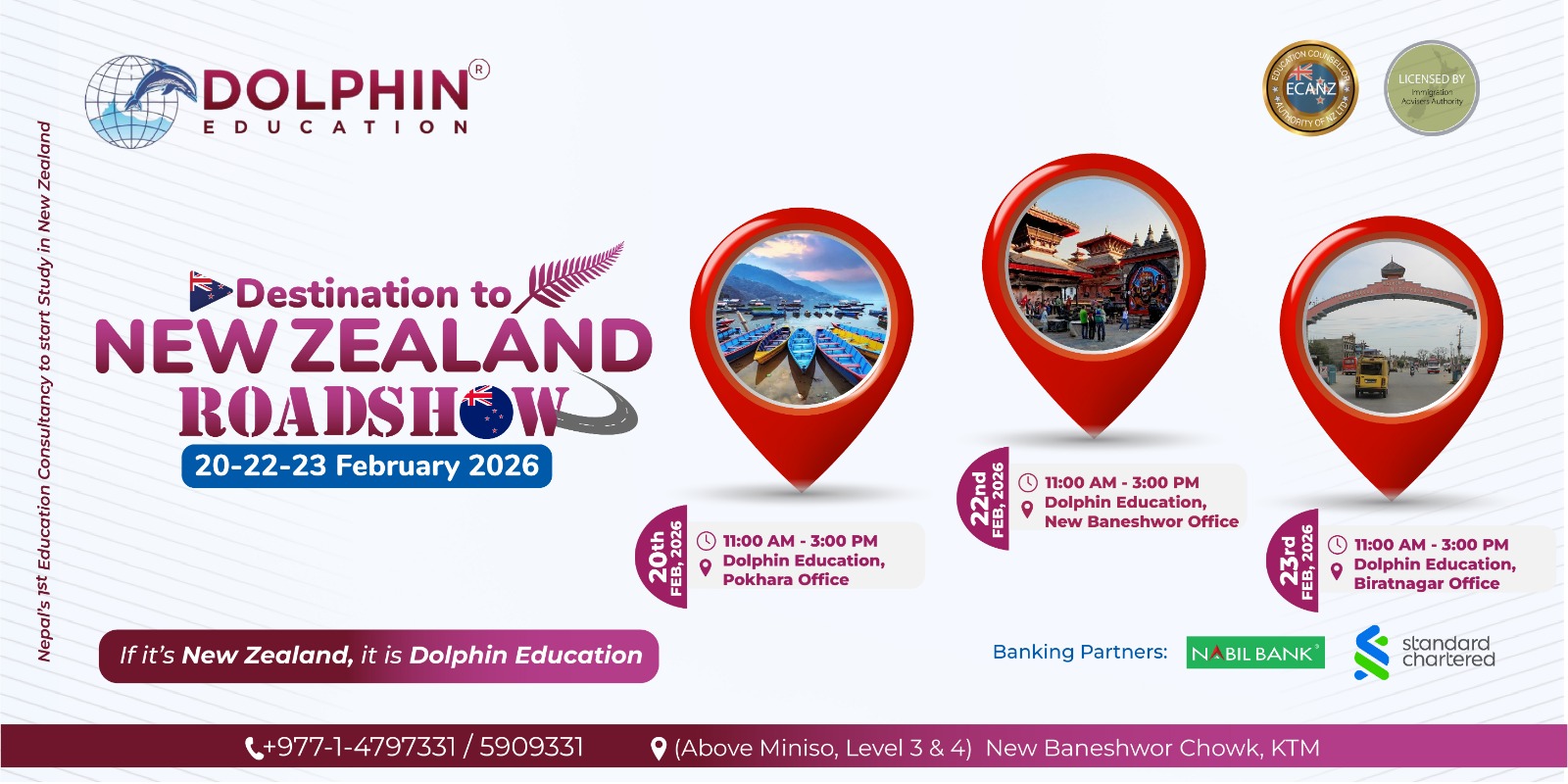


At Dolphin Education, our experienced career counselors — with over 20 years of success in education consultancy — offer personalized guidance to help students choose the right institute and course. From university selection to application strategies, our team ensures you make informed decisions. Our documentation experts and licensed immigration lawyers assist with every step, guaranteeing smooth processing and full legal compliance for studying abroad.

Achieve your desired band score with our expert-led IELTS and PTE coaching programs. We offer: - Customized learning plans - Free IELTS/PTE mock tests - One-on-one mentorship from certified trainers - Proven strategies to improve your English proficiency Whether you're aiming to study or settle abroad, we help you gain the confidence and skills needed to excel in your English language exams.

Our specialists provide comprehensive documentation support, ensuring accuracy and timely submission of your academic and visa-related paperwork. We also offer: - Professional Statement of Purpose (SOP) writing services - Personalized SOP editing and improvement sessions - Guidance tailored to the expectations of top universities and embassies - Craft a compelling SOP that showcases your strengths and maximizes your chances of admission.

Stand out with our interview preparation classes, designed to help you succeed in: - Student visa interviews - University admission interviews We provide expert coaching, mock interview sessions, and personalized feedback to enhance your communication skills and confidence.

At Dolphin Education, we take pride in being the first education consultancy in Nepal to introduce and officially promote Study in New Zealand opportunities. As a trailblazer in international education, we successfully organized Nepal’s first-ever “Study in New Zealand Fair,” endorsed by Immigration New Zealand and supported by Education New Zealand and ITPs/Te Pūkenga. With over 23 years of experience, our mission is to empower students with the knowledge, guidance, and resources necessary to succeed in their academic and professional pursuits. At Dolphin Education, we specialize in helping students navigate the world of academic opportunities.





 Free Mock Test
 Achieve Your Desired IELTS Score with Dolphin Education
Dolphin Education, where your success in the IELTS exam is our top priority. Our IELTS Preparation Classes are meticulously designed to help you achieve your desired score. With a comprehensive curriculum, experienced instructors, and personalized learning plans, Dolphin Education stands out as the premier choice for IELTS preparation.
Recognized globally by over 10,000 institutions, including universities, employers, and immigration authorities, the International English Language Testing System (IELTS) is your gateway to international education and career prospects.
 Free Mock Test
 Step into the future with confidence and unlock endless opportunities with PTE.
Dolphin Education is committed to helping you thrive on the Pearson Test of English (PTE) through our skillfully developed PTE Preparation Classes. Elevate your language skills with our dynamic PTE preparation classes. Our comprehensive program guarantees that you are fully prepared for every part of the exam by using a systematic approach that includes an initial assessment, personalized study plans, and targeted modules.
 Free Mock Test
 Dolphin Education – Your Partner in Achieving TOEFL Success!
Dolphin Education’s TOEFL Preparation Classes are precisely developed to help you obtain your target score on the TOEFL. Our comprehensive program guarantees that you are fully prepared for every part of the exam by using a systematic approach that includes an initial assessment, personalized study plans, and targeted modules.
Prepare to conquer the Test of English as a Foreign Language (TOEFL) with our intensive preparation classes. With its standardized evaluation of reading, listening, speaking, and writing skills, TOEFL is the key to unlocking overseas education opportunities.
Our experienced instructors will equip you with the skills and strategies needed to ace the exam and secure admission to your dream university.
Free Mock Test 



















You’ve spent months, maybe years, preparing for this moment. The visa is approved, the flights are booked, and New Zealand is finally within reach. But somewhere between the excitement... read more

Which Are the Best Countries to Study Abroad for Nepali Students in 2026? The best countries to study abroad for Nepali students in 2026 are Australia, Canada, the United... read more

New Zealand has become one of the most preferred study destinations for international students due to its globally recognized universities, high-quality education system, affordable tuition fees, and excellent post-study... read more

New Zealand has become one of the top destinations for international students because of its world-class education system, globally recognized universities, affordable tuition fees, and excellent post-study work opportunities.... read more
You’ve spent months, maybe years, preparing for this moment. The visa is approved, the flights are booked, and New Zealand is finally within reach. But somewhere between the excitement of getting in and the relief of finishing your final exam, one question keeps coming back: what happens after graduation, what about post study work visa in New Zealand?
If you’re a Nepali student planning to study in New Zealand, or you’re already there and counting down the weeks until your last assignment, this guide walks you through exactly what comes next the visas, the timelines, the rules that are changing in late 2026, and the practical steps that actually matter.
A lot of students choose New Zealand because of the promise of working there after graduation. And that promise is real but it only pays off if you understand how it works. Every year, students miss deadlines, pick the wrong course level, or assume a qualification will lead to open work rights when it actually comes with restrictions. Getting this wrong doesn’t just cost you time; it can mean packing your bags and heading home sooner than planned.
So let’s break down what you’re actually entitled to once you finish studying in New Zealand.
The Post Study Work Visa, usually just called the PSWV, is the primary route international graduates use to stay and work in New Zealand after completing their studies. It’s an open work visa, meaning that in most cases you’re free to work for any employer, in any role, anywhere in the country.
To qualify, you generally need one of the following:
Here’s the part that trips a lot of students up: not every diploma or certificate automatically qualifies. If you’re doing a non-degree program, it’s worth checking whether your specific course is on that eligible list before you enroll, not after you graduate.
The length of your Post Study Work Visa depends entirely on what you studied:
One rule that catches people off guard: you can only ever be granted a Post Study Work Visa once in your lifetime. Even if you go back and complete a higher qualification later, a second PSWV isn’t on the table. This makes your study pathway a genuinely strategic decision, not just an academic one.
If your qualification is a Level 7 or lower non-degree course, keep in mind your work rights may be tied to a job that’s relevant to what you studied, rather than fully open. Degree-level graduates don’t have that restriction.
Immigration New Zealand has announced two significant updates that will directly affect graduates from November 16, 2026 onward.
A brand-new Short-Term Graduate Work Visa will give eligible graduates up to six months of open work rights. This is aimed at students whose qualification doesn’t currently make them eligible for a full PSWV — think NZQCF Level 5 to 7 qualifications studied full-time for at least 24 weeks. To qualify, you’ll also need to show access to at least NZD 5,000 in funds, and you’ll need to apply within three months of your student visa expiring. It’s designed as a bridge: enough time to find a job and potentially move onto an Accredited Employer Work Visa, rather than a long-term solution on its own.
The Post Study Work Visa itself is being expanded to include graduates who’ve completed a Graduate Diploma at NZQCF Level 7, provided they already hold a bachelor’s degree — whether that degree was completed in New Zealand or somewhere else, and regardless of when it was awarded. To qualify under this new pathway, your Graduate Diploma needs to have been studied full-time in New Zealand for its entire duration, with no cross-crediting or recognition of prior learning counting toward it.
For Nepali students who’ve already completed a bachelor’s degree back home and are considering a Graduate Diploma in New Zealand as their next step, this is genuinely good news. A door that wasn’t open before is opening from late 2026.
Timing is everything here. In most cases, you need to apply within three months of your student visa expiring. There are a couple of exceptions:
You’ll need to apply from within New Zealand, and you’ll be asked for proof of your completed qualification (a transcript or a letter from your institution works), evidence of at least NZD 5,000 in funds, and potentially a medical certificate or police certificates depending on your circumstances. The visa fee sits at roughly NZD 1,670, and it’s non-refundable, so it pays to have your documents in order before you submit.
One practical tip: if you apply before your current student visa expires, you’re generally allowed to keep working under your existing conditions while the PSWV application is processed. Don’t wait until the last week to submit.
Degree-level PSWV holders get genuinely open work rights — you can work for any employer, switch jobs, or even go into business for yourself. You can also support your partner’s work or student visa, and your children can apply for student visas of their own.
There are limits, though. If your qualification falls into the non-degree, Level 7-or-below category, your work needs to relate to your field of study and meet Immigration New Zealand’s job requirements. And regardless of qualification level, you must stay on a valid visa at all times; letting it lapse, even briefly, can create serious complications for future applications.
For many Nepali students, the PSWV isn’t the end goal it’s a stepping stone. Once you’re working in New Zealand, especially in an occupation on the Green List or one that scores well under the Skilled Migrant Category points system, you may be able to transition toward residence. This isn’t automatic or guaranteed, and policy in this space shifts fairly often, but the practical experience and local job history you build during your PSWV years genuinely strengthens a future residence application.
If long-term settlement is part of your plan, it’s worth choosing your course and your post-graduation job with that end goal already in mind, rather than figuring it out after you’ve already graduated.
Choose your qualification level deliberately. If your long-term goal is to work and eventually settle, a Level 7 degree or higher gives you open work rights and a full three-year visa if you go on to postgraduate study a much stronger starting position than a lower-level diploma.
Keep your finances organized well before you apply. The NZD 5,000 requirement, along with visa fees, needs to be documented clearly, and last-minute bank statement issues are a common, avoidable cause of delay.
Don’t assume every course guarantees post-study work rights. If you’re evaluating options through an agent or a university brochure, ask directly whether the specific program is currently eligible for the PSWV, and get that confirmation in writing if you can.
Watch the November 2026 changes closely if you’re studying a Graduate Diploma. If you already hold a bachelor’s degree, this new pathway could open up options that weren’t previously available to you.
Graduating in New Zealand is genuinely just the beginning of a longer decision-making process, not the finish line. The rules are detailed, they change periodically, and small missteps around timing or qualification choice can have outsized consequences. But with the right information and a bit of planning well before your final semester, the transition from student to working professional in New Zealand is very achievable, and with the changes coming in November 2026, more pathways are opening up than ever before.
If you’re still choosing where and what to study, factor your post-graduation goals into that decision now. It’s far easier to plan for the visa you want at the start of your journey than to work around the one you’re left with at the end of it.
No. You can only be granted one Post Study Work Visa in your lifetime, even if you later complete a higher qualification.
No, the standard PSWV for degree-level graduates gives you open work rights, so you don’t need a job offer before applying.
You risk losing eligibility entirely, so it’s important to apply as soon as your qualification is confirmed and well before your student visa expires.
No. Both visas explicitly exclude applicants who have previously held either a Short-Term Graduate Work Visa or a Post Study Work Visa.
The best countries to study abroad for Nepali students in 2026 are Australia, Canada, the United Kingdom, the United States, and New Zealand, among many others. These destinations offer world-class universities, legal part-time work during studies, post-study work visas, and genuine pathways to permanent residency. The right choice depends on your budget, field of study, and long-term immigration goals.
This guide covers all five countries in full detail — updated 2026 visa policies, real tuition and living costs, work rights, PR pathways, English score requirements, and honest advice on which destination suits which type of student. Read the full guide or jump directly to the country that interests you.
Nepal sends more than 100,000 students abroad every single year, and the number has climbed steadily for the past decade. The reasons go beyond simply wanting a foreign degree. International qualifications open doors to global job markets, offer higher starting salaries, and for many families represent the beginning of a long-term plan to settle overseas.
In 2026, the study abroad landscape has shifted more than it has in several years. Australia tightened document scrutiny specifically for Nepali applicants. Canada exempted postgraduate students from its permit caps. The UK confirmed a policy deadline on its post-study work visa that makes timing critical. Staying current on these changes is not optional — it’s the difference between a successful application and a wasted year.
Key Fact: Nepal ranks among the top 10 countries globally for outbound international students relative to population size. Over 65% of Nepali students choose one of five destinations: Australia, Canada, the UK, the USA, or New Zealand.
Use this comparison table to quickly identify which country fits your priorities before reading the full country profiles below.
| Country | Annual Tuition | Part-Time Work | Post-Study Work Visa | PR Pathway |
| 🇦🇺 Australia | AUD 20,000–45,000 | 48 hrs/fortnight | 2–4 yrs (Subclass 485) | GSM Points Test |
| 🇨🇦 Canada | CAD 15,000–35,000 | 24 hrs/week | Up to 3 yrs (PGWP) | Express Entry / PNP |
| 🇬🇧 United Kingdom | GBP 14,000–25,000 | 20 hrs/week | 2 yrs (Graduate Route)* | Skilled Worker Visa |
| 🇺🇸 United States | USD 18,000–65,000 | 20 hrs/week on-campus | 12–36 months (OPT/STEM) | H-1B / EB Green Card |
| 🇳🇿 New Zealand | NZD 22,000–35,000 | 25 hrs/week | 1–3 yrs (PSWV) | Skilled Migrant Category |
*UK Graduate Route reduces to 18 months for applications submitted after January 1, 2027.
New Zealand is the most underrated study destination for Nepali students in 2026. Tuition fees are 15–25% lower than comparable Australian programs. Part-time work was increased to 25 hours per week in 2026. The visa process is transparent, competition from other Nepali applicants is lower, and the Skilled Migrant Category offers a realistic route to permanent residency for graduates in priority occupations.
New Zealand doesn’t appear at the top of most Nepali study-abroad lists, and that’s precisely why it deserves a closer look. While tens of thousands of Nepali students compete for spots in Australian and Canadian institutions, New Zealand’s applicant pool is comparatively thin — which means less competition for university places, scholarships, and post-graduation jobs.
The 2026 update to part-time work hours from 20 to 25 per week has made the financial picture more manageable. At New Zealand’s minimum wage of approximately NZD 23 per hour, 25 hours of work per week generates roughly NZD 575 weekly — meaningful income toward rent and groceries without burning out on excessive working hours at the cost of your studies.
New Zealand’s Post-Study Work Visa (PSWV) allows graduates to remain in New Zealand and work for any employer for 1 to 3 years after graduation. The duration depends on the level of your qualification and whether you studied in Auckland or a regional location. Graduates who studied outside Auckland may also qualify for additional immigration points under the Skilled Migrant Category.
| Qualification | Auckland Study | Regional Study |
| Bachelor’s degree (Level 7) | 1 year | 2 years |
| Postgraduate degree (Level 8) | 2 years | 3 years |
| Master’s degree (Level 9) | 3 years | 3 years |
| Doctoral degree (Level 10) | 3 years | 3 years |
| Expense | Cost (NZD) |
| Undergraduate tuition per year | 25,000 – 35,000 |
| Postgraduate tuition per year | 22,000 – 33,000 |
| Living costs/month — Auckland | 1,600 – 2,200 |
| Living costs/month — other cities | 1,200 – 1,700 |
| Student visa application fee | 375 |
| Weekly income potential (25 hrs/wk) | ~575 (at NZD 23/hr minimum wage) |
Australia is the most popular country for Nepali students to study abroad in 2026. It offers strong universities, 48 hours of part-time work per fortnight, post-study work visas of 2 to 4 years, and a transparent PR points system. In January 2026, Nepal was reclassified to Assessment Level 3, requiring stricter document verification for all student visa applications.
To study in Australia, Nepali students apply for the Student visa (Subclass 500). The Australian Department of Home Affairs manages the process. In January 2026, Nepal was moved from Assessment Level 2 to Assessment Level 3 under the Simplified Student Visa Framework (SSVF) — the strictest scrutiny tier — following a spike in fraudulent document submissions from Nepal in late 2025.
This does not mean Nepali students are banned or capped. It means every document in your application is verified more thoroughly. Students with genuine, traceable documentation continue to receive approvals.
Nepali students in Australia can work up to 48 hours per fortnight (roughly 24 hours per week) during the academic semester, and unlimited hours during official university breaks. At Australia’s minimum wage of approximately AUD 24.10 per hour, this generates meaningful income toward living costs.
Canada offers Nepali students one of the most reliable pathways to permanent residency through Express Entry and Provincial Nominee Programs. In 2026, master’s and PhD students at public Canadian universities are fully exempt from the national study permit cap and the Provincial Attestation Letter (PAL) requirement, making postgraduate applications significantly more accessible.
Canada introduced a national cap on study permits and a Provincial Attestation Letter (PAL) system in early 2024, creating significant uncertainty for international applicants. The key 2026 update: master’s and PhD students applying to public universities are now fully exempt from both the cap and the PAL requirement. Undergraduate and diploma applicants still face provincial quotas and must obtain a PAL before their study permit application can proceed.
2026 Update: Postgraduate students (master’s & PhD) at public Canadian universities are exempt from the national study permit cap. This is the single most important Canadian policy change for Nepali students this year.
Canada’s Post-Graduation Work Permit (PGWP) allows international graduates of eligible Canadian institutions to work anywhere in Canada for any employer for up to 3 years. It is open work authorization — you are not tied to one job or employer — and it is the primary first step toward Canadian permanent residency for most Nepali graduates.
| Program Length | PGWP Duration |
| Less than 8 months | Not eligible |
| 8 months to less than 2 years | Equal to program length |
| 2 years or more (public university) | 3 years (maximum) |
| Master’s degree (any length) | 3 years |
| Doctoral degree (PhD) | 3 years |
The UK is the best choice for Nepali students who want a globally respected master’s degree in the shortest time possible. One-year master’s programs save a full year of tuition and living costs compared to Canada, Australia, or the USA. The Graduate Route post-study work visa currently allows 2 years of work after graduation — but this reduces to 18 months for applications made after January 1, 2027.
The United Kingdom consistently places more universities in the global top 100 than any other country outside the United States. But what makes the UK particularly attractive for Nepali students isn’t just prestige — it’s efficiency. A one-year master’s program means you pay one year of tuition instead of two, live for one year instead of two, and enter the job market or return home a full year earlier than peers who chose a longer program elsewhere.
The UK also has a well-established Nepali community across London, Leeds, Sheffield, Coventry, and Manchester. For students arriving from Nepal for the first time, that existing network makes an enormous practical difference in the first months of study.
CONFIRMED: The UK Graduate Route post-study work visa will be reduced from 2 years to 18 months for applications submitted on or after January 1, 2027. Students who enrol in 2026 and graduate before that date retain access to the full 2-year Graduate Route. This is official UK government policy, not speculation.
The Graduate Route allows international graduates to stay in the UK after finishing their degree, work in any job at any skill level, and build experience toward a Skilled Worker visa. Two full years of this flexibility is significantly more valuable than 18 months for graduates in competitive fields where job searching alone can take several months.
Most UK universities require a minimum IELTS Academic score of 6.0 to 6.5 overall for master’s programs, with no individual band below 5.5 to 6.0. Top universities such as UCL, Manchester, and Edinburgh typically require 6.5 to 7.0. Some institutions also accept PTE Academic or TOEFL iBT scores as alternatives to IELTS.
The United States is the best destination for Nepali students targeting funded master’s or PhD programs in STEM, engineering, business, or public health. Graduate assistantships can cover full tuition plus a monthly stipend. STEM graduates are eligible for 36 months of post-study work through Optional Practical Training (OPT). The F-1 visa interview requires thorough preparation.
The F-1 student visa interview at the US Embassy in Kathmandu has become increasingly thorough. Visa officers focus on three specific areas when evaluating Nepali student applications:
A well-prepared, honest application with real documentation clears all three of these consistently. Students who are rejected are usually those with inconsistent stories, unexplained funds, or programs that don’t align with their background.
Optional Practical Training (OPT) is a benefit of the F-1 visa that allows international graduates to work in the US in a role related to their degree field. Standard OPT lasts 12 months. STEM graduates (science, technology, engineering, mathematics) qualify for a 24-month STEM OPT extension, giving them a total of 36 months of authorized US work experience after graduation.
At the undergraduate level, US universities are the most expensive on this list. At the graduate level, the picture changes dramatically:
All five countries require proof of English language proficiency. Below are the standard minimum requirements and recommended scores for competitive applications:
| Country | Min. IELTS (Academic) | Recommended Score | Alternatives Accepted |
| Australia | 5.5–6.0 overall | 6.5, no band below 6.0 | PTE Academic, TOEFL iBT |
| Canada | 6.0 overall | 6.5 with balanced bands | PTE Academic, TOEFL iBT, Duolingo |
| United Kingdom | 6.0–6.5 overall | 6.5–7.0 (top universities) | PTE Academic, TOEFL iBT |
| United States | 6.5–7.0 overall | 7.0+ (competitive programs) | TOEFL iBT preferred, Duolingo at some schools |
| New Zealand | 5.5–6.0 overall | 6.0–6.5 recommended | PTE Academic, TOEFL iBT |
Choose your study destination based on four factors: your total budget per year, your field of study and which country’s job market rewards it most, your long-term goal (PR or return to Nepal), and your current academic profile and language scores. The country that checks the most boxes for your specific situation is the right choice — not the most popular one.
| Your Priority | Best Country | Key Reason |
| Lowest total cost of education | New Zealand | Lower tuition than AUS, 25 hrs/wk work rights |
| Fastest master’s degree completion | United Kingdom | One-year programs save 12 months & one year’s costs |
| Clearest PR pathway | Canada | Express Entry + PGWP is most transparent system |
| Best research & STEM funding | United States | TA/RA assistantships can eliminate tuition costs |
| Largest Nepali community support | Australia | Most established Nepali networks across all major cities |
| Least competitive application process | New Zealand | Smaller applicant pool, updated work rights in 2026 |
Essential Documents for a Student Visa Application From Nepal in 2026
Regardless of destination, these are the core documents required for every student visa application. Having all of them ready, genuine, and consistent across your application is the most important factor in your outcome.
Scholarships are available for Nepali students across all five destinations, ranging from partial tuition reductions to fully funded programs covering tuition, living costs, and airfare. Here are the key options to research for each country:
| Country | Scholarship | Coverage | How to Apply |
| Australia | Australia Awards Scholarships | Full tuition + living allowance | Via Australian Embassy Kathmandu |
| Canada | Vanier Canada Graduate Scholarships | CAD 50,000/year for PhD students | Through your Canadian university |
| United Kingdom | Chevening Scholarships | Full tuition + living + airfare | chevening.org — open Sep–Nov annually |
| United States | Fulbright Foreign Student Program | Full tuition + stipend + airfare | fulbright.state.gov — via US Embassy |
| New Zealand | NZ Excellence Awards | Up to NZD 10,000 tuition reduction | Via individual NZ university websites |
Here is a concise summary of the most important points from this guide — designed to be easily referenced before making your final decision:
These are the most commonly searched questions by Nepali students considering studying abroad in 2026. Each answer is designed to give you a clear, direct response you can act on.
The best country for Nepali students in 2026 depends on your goals. For lowest cost: New Zealand. For fastest degree: UK. For best PR pathway: Canada or Australia. For STEM research funding: USA. There is no single universally best country — the right one is the one that matches your budget, course, and long-term plans.
Yes. Australia has not introduced a quota or ban for Nepali student visa applicants. The January 2026 reclassification to Assessment Level 3 means Nepal’s applications face stricter document verification — not a restriction on numbers. Genuine students with real, traceable documentation continue to receive approvals at similar rates to before.
Yes, all five countries offer legitimate pathways to permanent residency for international graduates. Canada’s Express Entry and PNP system is the most structured. Australia’s GSM points test is transparent and achievable in priority occupations. New Zealand’s Skilled Migrant Category rewards graduates in Green List roles. The UK and US pathways exist but require more years of skilled work experience before PR becomes realistic.
No, the UK Graduate Route is not being cancelled. It is being reduced from 2 years to 18 months for applications submitted on or after January 1, 2027. Students who begin their studies in 2026 and graduate before the policy change takes effect will retain the full 2-year Graduate Route. The route remains available and valid for Nepali students.
Most Canadian universities require a minimum IELTS Academic score of 6.0 to 6.5 overall for undergraduate programs, and 6.5 for most postgraduate programs. Top programs may require 7.0 or higher. Canadian institutions also accept PTE Academic, TOEFL iBT, and Duolingo English Test scores as alternatives to IELTS.
Yes. As of 2026, Nepali students studying full-time in New Zealand are allowed to work up to 25 hours per week during the academic semester. This is an increase from the previous 20-hour limit. During official university breaks, students can work full-time hours without restriction.
Nepali students should begin the study abroad application process 8 to 12 months before their intended intake date. This timeline allows sufficient time for English language testing, document gathering and verification, university applications, offer letter receipt, and visa processing — without the errors that rushed applications consistently produce.
New Zealand currently has the most straightforward student visa process for Nepali students among the five destinations.
New Zealand has become one of the most preferred study destinations for international students due to its globally recognized universities, high-quality education system, affordable tuition fees, and excellent post-study work opportunities. Every year, thousands of students from around the world choose New Zealand to pursue undergraduate, postgraduate, diploma, and vocational courses.
One of the most important things you must understand before applying is New Zealand’s intake system. Choosing the right intake helps you plan their academic journey, visa process, accommodation, finances, and career opportunities more effectively.
This complete guide explains the major intakes in New Zealand, application timelines, benefits of each intake, and tips for selecting the best intake for your study goals.
The major intakes in New Zealand are:
Each intake has different advantages, course availability, and deadlines.
February Intake in New Zealand
The February intake is the primary and most popular intake in New Zealand. Most universities and colleges offer the most courses during this intake.
Students applying for undergraduate, postgraduate, MBA, diploma, and research programs usually prefer the February intake because it offers the most academic and scholarship opportunities.
Benefits of February Intake
Best For
July Intake in New Zealand
The July intake is the second major intake in New Zealand and is highly popular among international students who miss the February intake.
Many universities offer a good range of undergraduate and postgraduate programs during the July intake.
Benefits of July Intake
Best For
November Intake in New Zealand
The November intake is considered a minor intake and is available for selected programs and institutions only.
This intake usually offers a limited number of diploma, vocational, and certificate courses.
Benefits of November Intake
Best For
Which Intake Is Best in New Zealand?
The best intake depends on your course preference, academic readiness, budget, and future career goals.
Choose February Intake If:
Choose July Intake If:
Choose November Intake If:
Top Universities in New Zealand Offering Multiple Intakes
Several top-ranked universities in New Zealand offer admissions during February and July intakes.
These include:
Students should always verify intake availability for their selected course because admission periods may vary by program.
Documents Required for New Zealand Intake Applications
International students generally need the following documents while applying for New Zealand intakes:
Preparing documents early helps avoid delays during university admissions and visa processing.
When Should You Apply for New Zealand Intakes?
Students are strongly advised to begin their preparation at least 6 to 8 months before their intended intake.
Applying early provides several advantages:
Late applications may reduce available seats and increase visa processing risks.
Advantages of Studying in New Zealand
New Zealand has become one of the top study-abroad destinations because of its student-friendly environment and globally respected education system.
Globally Recognized Universities
New Zealand universities are internationally recognized for academic excellence, innovation, and practical learning methods.
Affordable Education
Compared to countries like the USA, UK, and Australia, New Zealand offers quality education at comparatively affordable tuition fees and living costs.
Post-Study Work Opportunities
International students can access post-study work visas after graduation, allowing them to gain valuable international work experience.
Safe and Peaceful Environment
New Zealand is known for its safety, multicultural environment, and high quality of life.
Career Opportunities
Graduates from New Zealand institutions often receive strong global career opportunities across multiple industries.
Tips for Choosing the Right Intake in New Zealand
Before selecting an intake, students should consider:
Choosing the right intake can significantly improve both academic success and overall student experience.
Final Thoughts
Understanding the intakes in New Zealand is one of the most important steps for international students planning to study abroad. The February intake remains the most preferred option due to wider course availability and scholarship opportunities, while the July intake provides an excellent alternative for students needing additional preparation time.
Students should start planning early, prepare all documents carefully, and apply before deadlines to maximize their chances of university admission and student visa approval.
If you are planning to study in New Zealand, selecting the right intake can help you begin your academic journey smoothly and successfully while opening doors to global education and career opportunities.
New Zealand generally offers three major intakes for international students: February Intake, July Intake, and November Intake.
The February intake is considered the best and most popular intake because it offers the widest range of courses, higher scholarship opportunities, and better internship options.
The July intake is the second major intake and is ideal for students who miss the February intake or require additional preparation time.
The February intake usually offers the highest number of scholarships and financial aid opportunities for international students.
Yes, many universities allow students to defer their admission to a later intake, subject to university policies and conditions.
New Zealand has become one of the top destinations for international students because of its world-class education system, globally recognized universities, affordable tuition fees, and excellent post-study work opportunities. Compared to many other study destinations like the USA, UK, or Australia, the cost of study in New Zealand is comparatively reasonable.
For Nepali and other international students planning to study abroad, understanding the overall cost of studying in New Zealand is very important before beginning the application process. From tuition fees to accommodation and daily living expenses, students should prepare a proper financial plan.
The tuition fee in New Zealand depends on the university, course, and level of study. Programs like Medicine, Engineering, and MBA generally cost more than Arts or Humanities courses.
| Study Level | Average Annual Tuition Fee |
| Diploma & Certificate | NZD 10,000 – NZD 20,000 |
| Bachelor’s Degree | NZD 25,000 – NZD 55,000 |
| Master’s Degree | NZD 20,000 – NZD 45,000 |
| PhD Programs | NZD 6,500 – NZD 9,000 |
International students pursuing research-based PhD programs in New Zealand often pay the same tuition fees as domestic students, making it one of the most affordable destinations for doctoral studies.
Apart from tuition fees, students also need to manage their living expenses while studying in New Zealand. The living cost depends on the city, lifestyle, and accommodation type.
On average, international students may require around NZD 15,000 – NZD 22,000 per year for living expenses.
Accommodation is usually the largest expense for students in New Zealand.
| Accommodation Type | Average Monthly Cost |
| University Hostel | NZD 800 – NZD 1,500 |
| Shared Apartment | NZD 500 – NZD 1,000 |
| Homestay | NZD 900 – NZD 1,400 |
Cities like Auckland and Wellington are generally more expensive compared to smaller cities.
You may spend around NZD 250 – NZD 500 per month on food and groceries depending on their lifestyle and eating habits.
Cooking at home can significantly reduce expenses.
Public transportation in New Zealand is affordable and student-friendly.
You usually spend around NZD 80 – NZD 150 per month on buses, trains, or local transport services.
Utility costs including electricity, internet, heating, and water may cost approximately NZD 100 – NZD 250 per month.
Health insurance is mandatory for international students in New Zealand. The average insurance cost ranges from NZD 500 to NZD 800 per year depending on the provider and coverage.
Students applying for a New Zealand student visa need to pay visa application fees and provide proof of sufficient funds.
For Nepali students, the total first-year cost of studying in New Zealand may range between NPR 25 Lakhs to NPR 45 Lakhs depending on the course, university, and city.
| Expense Category | Estimated Cost |
| Tuition Fees | NPR 15 – 30 Lakhs |
| Living Expenses | NPR 8 – 12 Lakhs |
| Visa & Insurance | NPR 1 – 2 Lakhs |
| Airfare & Miscellaneous | NPR 1 – 2 Lakhs |
Many universities and organizations offer scholarships to international students based on academic performance and eligibility criteria.
Some popular scholarships include:
Scholarships can help reduce tuition fees and overall study expenses significantly.
Yes, international students in New Zealand can work up to 25 hours per week during study periods and full-time during scheduled holidays.
Part-time jobs can help students manage their living expenses and gain international work experience.
One of the major advantages of studying in New Zealand is the excellent post-study work opportunities available for international students. After completing their studies, students can apply for a Post-Study Work Visa, which allows them to stay and work in New Zealand legally.
This opportunity helps graduates gain valuable international work experience, improve their career prospects, and even explore pathways toward permanent residency.
International students who complete eligible qualifications in New Zealand may qualify for a post-study work visa for up to 3 years depending on the level and location of study.
With this visa, graduates can:
New Zealand offers globally recognized education, a safe environment, practical learning approaches, and strong post-study work opportunities. Compared to many Western countries, the overall cost of education is relatively affordable.
Students also benefit from:
Choosing the right course and university can feel overwhelming, especially with so many options available. From course selection and university applications to visa documentation and pre-departure guidance, having expert support can make the process much smoother.
Dolphin Education has been guiding Nepali students towards international education opportunities for over two decades. Our dedicated team assists students throughout every stage of the study abroad journey.
Our services include:
✔ Personalised career counselling
✔ University and course selection guidance
✔ IELTS and PTE preparation support
✔ SOP and documentation assistance
✔ Visa application support
✔ Mock interview preparation
Whether you are interested in Information Technology, Engineering, Nursing, Business, Hospitality, or any other field, our team can help you find the right pathway to achieve your academic and career goals.
The cost of studying in New Zealand depends on various factors such as the university, course, city, and lifestyle choices. However, with proper planning, scholarships, and part-time work opportunities, studying in New Zealand can be an affordable and valuable investment for international students.
If you are planning to study in New Zealand from Nepal, it is always recommended to consult experienced education advisors to understand the complete financial requirements and admission process.
Yes, New Zealand generally offers lower tuition fees and living expenses compared to Australia, making it an affordable option for many international students.
Cities such as Hamilton, Dunedin, and Palmerston North are generally more affordable than Auckland and Wellington in terms of accommodation and living expenses.
Yes, international students can work up to 25 hours per week during academic sessions and full-time during scheduled holidays.
Students should budget for visa fees, medical examinations, English language tests, airfare, accommodation deposits, and other miscellaneous expenses.
Yes, New Zealand offers a variety of scholarships funded by universities, government agencies, and international organizations to help reduce study costs.


The support I received from Dolphin Education New Baneshwor to apply New Zealand for a student visa for my...

I had a wonderful experience with Dolphin Education when applying to study in New Zealand. My consultant, Miss Saru,...
I had an amazing experience with Dolphin Education. I got my visa for New Zealand with proper guidance and...
I took my IELTS class from Dolphin Education and achieved an overall band of 7. I would especially like...

I am fully satisfied with the service provided by Dolphin Education and all staff members were so helpful. I...